Last updated 2026-08-21
TL;DR
Standing-seam roof work in Hawaii is contractor work, not a special metal-only card. Most jobs need a C-42 roofing contractor license from the DCCA Professional and Vocational Licensing Division. Costs track national metal-roof ranges plus island freight. A typical residential reroof takes days of labor after weeks of paper, weather, and shipping. Confirm current fees and exams with the board.
What does standing-seam roof renewal mean in Hawaii?
Renewal here is not a state form you file every two years for a metal panel. It is the real job of replacing or overlaying an aging roof with standing-seam metal, plus the paper that lets you legally bid, pull permits, and get paid.
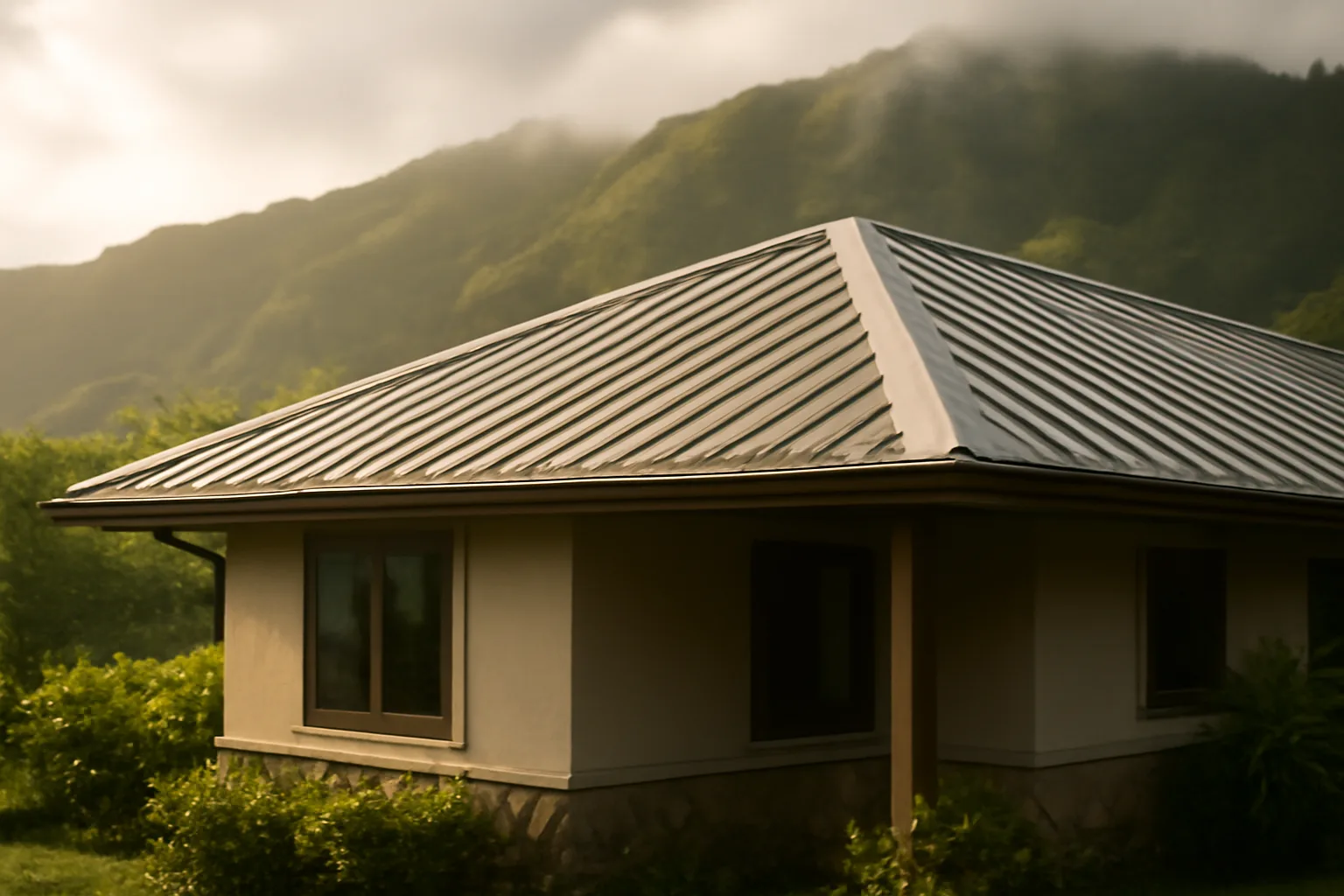
On Oahu, Maui, Kauai, and Hawaii Island that paper starts with contractor licensing, county building permits, and wind design that actually matches the site. Hawaii sits in a high-wind, salt-air climate. A standing-seam roof hawaii project that ignores that is just a future leak.
People search “renewal” because they want the path after the first roof fails, or they want to know if an existing contractor card still covers a new metal system. The short answer is that the trade license is C-42 roofing. The product choice (standing seam vs. screw-down vs. shingles) does not create a separate state license class.
Coming from another state? Do not assume your home license ports. Reciprocity is limited and you still have to satisfy Hawaii’s contractor law and county permit rules. I would treat every island as its own jobsite for freight, labor, and inspections.
Do you need a license for standing-seam roof in hawaii?
Yes, if you are contracting the work for others. Hawaii requires a contractor license for construction work above the statutory exemption, and roofing is its own specialty class. The Regulated Industries Complaints Office (RICO) says it plainly: “In Hawaii, a contractor’s license is required to bid on or perform construction work that is $1,500 or more.” [1]
The Hawaii Contractor License Board, under the Department of Commerce and Consumer Affairs (DCCA), issues C-42 Roofing Contractor licenses. The board’s classification list defines C-42 as the contractor who “applies and installs roofing, including built-up, single ply, shake, shingle, tile, and metal roofing.” [2] Standing seam is metal roofing. It sits inside C-42, not in a mystery “panel seamer” class.
A C-42 holder can also carry other classifications when the work leaves the roof plane (structural steel, solar, electrical). Do not invent extra tickets you do not need. Confirm the current classification text and any dual-license questions with the board before you print business cards.
Homeowners doing their own house sit in a different lane. Owner-builder work has its own limits and disclosure rules, and you still need county permits. Hire help on a $1,500-or-more job and that helper is not a casual weekend friend. That is contracting. RICO investigates unlicensed contracting. Fines and stop-work orders are real. [1]
The exam path is a trade exam plus a business and law exam unless you qualify for a waiver the board actually grants. Experience affidavits, a responsible managing employee (RME), and a surety bond all sit on the application. I would not guess bond amounts or current exam fees. Those change. Pull the live contractor application packet from DCCA PVL. [3]
County building departments still want a licensed contractor on most permitted reroofs. Honolulu, Maui, Hawaii County, and Kauai each run their own permit counters. Licensing is statewide. Permits are local. Both matter.
How much does standing-seam roof cost in hawaii?
National installed standing-seam prices are the only honest public range I will quote, then I will tell you why Hawaii sits above it. HomeAdvisor’s metal roofing cost guide puts standing-seam metal roofs at about $10 to $16.50 per square foot installed in typical U.S. markets, with a 1,700-square-foot house often landing near $15,000 to $27,000 before extras. [4]
That is not a Hawaii bid. Island freight, barge schedules, crane time, steep tropical roofs, and thin crew depth push the number up. I have not seen a current statewide published median just for standing-seam on Oahu or the neighbor islands. Anyone quoting a single “Hawaii average” without a bid packet is guessing.
What you can price with receipts: coil and clip freight from the mainland or Asia, seamer rental or purchase, underlayment rated for high wind, ice-and-water or high-temp underlayment at eaves, stainless or coated fasteners, and fall protection. Labor is the swing item. A two-person crew that can actually run a mechanical seamer is not cheap on any island.
Permit fees are county fees, not a DCCA license fee. Honolulu’s building permit fees run off a public valuation-based schedule. [5] Do not treat that table as your roof price. It is the tax on the valuation you declare.
Buying only the panels and seaming them yourself as an owner-builder? Material-only standing seam still runs several dollars a square foot before clips, underlayment, flashings, and the seamer. The $149 one-time Seamer + Panel-Math Kit from StandingSeamPath is a takeoff and process kit, not a Hawaii permit and not a substitute for a C-42 card. Use it to count panels. Then get a real freight quote.
Waste of money: paying mainland “national chain” pricing that ignores barge minimums, then discovering the ridge cap is sitting in Oakland. Get a landed-cost quote before you promise a homeowner a number.
How long does standing-seam roof take in hawaii?
The physical install on a simple single-family roof is often a few days to two weeks of on-roof time once panels are on island and the deck is ready. The calendar from first call to final inspection is longer. Weather, shipping, and permit review dominate.
Honolulu’s Department of Planning and Permitting reviews building permits, and review time depends on completeness and workload. There is no honest single-day promise I can print. Confirm current review queues with DPP or your neighbor-island building division before you schedule a tear-off. [6]
Typical sequence I would actually run: site measure and wind-zone check, written contract, contractor license and insurance packet to the owner, permit application, order coil or formed panels, wait on the barge, stage underlayment, tear-off or recover as allowed, hang panels, seam, flash, inspect. A missed barge can add a week. A Kona storm can add two.
Mechanical seaming is faster than people think once the first panel is true. Layout is what eats the first day. If the existing roof is plywood with rot at the eaves, you just bought decking days. Nobody has clean public data on average Hawaii standing-seam calendar days. The closest honest statement is that labor hours follow crew size and roof complexity, while the schedule follows freight and weather.
Do not promise a weekend install on a 2,000-square-foot hip roof with solar. That is how you lose the next referral.
Which Hawaii agency actually licenses the work?
The Contractor License Board sits inside DCCA’s Professional and Vocational Licensing Division. Applications, classifications, and renewal of the contractor entity all run through that office. Complaints and unlicensed activity go to RICO. [1] [3]
Hawaii Revised Statutes Chapter 444 is the contractor law. HRS §444-9 says, in part, that “No person within the purview of this chapter shall act, or assume to act, or advertise, as general engineering contractor, general building contractor, or specialty contractor without a license previously obtained under and in compliance with this chapter.” [7]
That statute is why a Facebook ad that says “standing seam specialist, licensed and insured” without a C-42 (or a qualifying general with the right specialty) is a problem. The board can discipline. RICO can cite.
Renewal of the contractor license itself is a DCCA renewal cycle, not a roof-product renewal. Confirm the current biennial window and any continuing education the board posts. I will not invent a fee. The PVL fee schedule is the source of truth the day you pay. [8]
County inspectors do not issue your C-42. They check the permit, the approved plans, and the work in the field. Keep those two stacks of paper separate in your head.
What paper do you need before you tear off a Hawaii roof?
Start with the written contract. Hawaii sets homeowner-contractor contract rules under HRS Chapter 444 and related consumer rules. [10] Get the license number on the contract. Get the scope, the metal spec, the underlayment, and who owns old-roof disposal.
Next is the county building permit. Honolulu DPP, Maui County, Hawaii County, and Kauai County each publish permit portals and valuation-based fee tables. A reroof is not always a same-for-same walk-up. Standing seam can change dead load, attachment, and fire classification. Change the roof covering type and you should expect plan review, not a same-day stamp. [5] [6]
Wind design is not optional. The Hawaii State Building Code Council adopts the International Building Code with Hawaii amendments. ASCE 7 wind maps and local amendments drive clip spacing and edge metal. Confirm the code edition your county has actually adopted. Do not design from a mainland catalog sheet. [9]
If the house has an existing PV array, you now have an electrical and racking problem. Coordinate with a licensed electrician. Do not cut around modules and call it a day.
Historic districts and special management areas add another counter. Coastal SMA permits run on a different statute. If the house sits near the shoreline, ask planning before you order copper-look steel.
I would also keep manufacturer installation instructions on the truck. Inspectors ask. Warranty claims fail when you freestyle the eave clip.
What does C-42 actually cover on a standing-seam job?
C-42 is roofing. The board’s classification language covers applying and installing metal roofing. That takes in standing-seam panels, clips, related flashings, and the underlayment that is part of the roof assembly. [2]
It does not automatically cover structural framing repairs beyond what a roofer normally does to receive the new covering. Sistering rafters or replacing a ridge beam may need a general building classification or a carpenter specialty, depending on scope. Ask the board in writing if the gray area is large. Verbal locker-room law is how people get cited.
Gutters and downspouts sometimes sit in a different specialty depending how they are sold. Sheet metal work can overlap C-44 Sheet Metal if you are fabricating architectural metal beyond roofing. Read the current classification list. Do not stretch C-42 into fascia art you cannot defend. [2]
Solar thermal or PV attached to the new seams needs the right electrical or solar classification on the crew that lands the modules. The roofer can make the roof ready. The electrician lands the circuit.
Out-of-state standing-seam crews who fly in for a week still work under a Hawaii-licensed contractor. A mainland C-39 or equivalent is not a Hawaii C-42.
How do Hawaii wind, salt, and rain change the spec?
Hawaii’s climate is why standing seam shows up on both plantation houses and new custom work. High rainfall wants a system that sheds water at the seam. Salt air wants coatings and fasteners that do not dissolve in two seasons. Wind wants clips and edge metal that stay put.
Metal-roof industry testing talks about wind uplift on standing-seam systems, but your job lives or dies on the county-adopted code and the manufacturer’s Hawaii-appropriate details. Use stainless or other corrosion-rated fasteners at the coast. Cheap painted screws on a standing-seam clip line are a future callback. [9]
Underlayment matters more than brochure photos. High-temp synthetic or self-adhered membranes at eaves and valleys are cheap insurance on a dark metal roof in full sun. Confirm fire classification if the house sits in a wildland-urban interface pocket. Some neighbor-island sites care. Some do not. Read the local amendment.
Ventilation is the quiet failure. Sealing a hot roof without a plan for the attic is how you cook plywood from the inside. Standing seam does not fix a dead attic.
I would not specify bare Galvalume a block from the ocean without a coating conversation. I also would not run a 24-inch panel on a complex hip roof just because the coil was on sale. Panel width is a labor and waste decision.
What does first-year operations look like after you hang the roof?
Year one is inspections, punch list, and watching fasteners and sealants you should not have needed. A properly seamed mechanical standing-seam roof is not a tube-of-caulk roof. Recaulking seams in month four means the install was wrong.
Walk the roof after the first serious Kona low. Check ridge closures, pipe boots, and solar flashings. Photograph everything. Homeowners forget what “new” looked like.
Contractor-side, year one is also license renewal season, workers’ comp audits, and keeping the RME actually employed if that is how you qualified. DCCA will not care that your best seamer moved back to Las Vegas. The responsible managing employee rules still apply. Confirm them on the current application instructions. [3]
Warranty paperwork is part of operations. Most paint warranties want registered installs and approved sealants. File them. County final inspection is not a manufacturer warranty.
If you are an owner, keep the contractor’s license number and the permit card. If a leak shows up, that packet is how you find the person who still holds a bond.
How does Hawaii compare with other states on this path?
Hawaii is stricter on the dollar threshold than many mainland states because the unlicensed-work trigger is low ($1,500). The specialty class (C-42) is clearer than states that bury metal roofing inside a generic building license. The trade-off is isolation. Freight and crew depth hurt more than the exam booklet. [1] [2]
California’s C-39 roofing path is a cousin, not a clone. Hold paper there and you still apply in Hawaii. Do not assume endorsement. For a side-by-side on another island-and-coast market, see standing-seam roof renewal in california and standing-seam roof renewal in florida.
Cold-climate states swap snow load for salt and trade ice dams for termites and rot at the fascia. The license logic is similar. The detailing is not. standing-seam roof renewal in alaska and standing-seam roof renewal in colorado help if you are comparing clip systems, not if you are copying their underlayment notes onto a Kaneohe hip roof.
I would rather lose a week confirming DCCA classifications than copy a mainland checklist and hope. Paper is cheaper than a RICO case.
What should you budget besides the metal?
Dumpsters and transfer-station fees on island are not mainland prices. Tear-off of old cedar or built-up roofing can outweigh the new panels on a small house. Ask the county solid-waste division for current rates. Do not hide disposal in a round number.
Fall protection, scaffolding on steep tile-to-metal conversions, and traffic control on narrow plantation streets show up on invoices. So does temporary dry-in if the barge is late.
Insurance: general liability and workers’ comp are not optional if you have employees. The Contractor License Board requires evidence of insurance and a bond as part of licensing. Amounts are set in rule and statute. Confirm the live figures on the application rather than copying a blog from 2019. [3] [8]
Design: a simple gable can be a manufacturer layout. A radius lanai roof needs a detailer. Pay for that once.
Tools: a mechanical seamer is not a luxury if you sold mechanical seam. Hand-crimping a 150-foot eave is how quality dies at 2 p.m. Rent or own, but do not fake it.
StandingSeamPath publishes takeoff process material so you can count panels before you buy coil. That is the second and last time I will mention the brand. The rest of this page works if you never click /start.
What facts can you confirm on a board website today?
Confirm these, because I will not invent the live number: current C-42 application fee, exam vendor and fee, bond amount, recovery-fund fee, biennial renewal fee, and any CE the board now requires. Start at the DCCA PVL contractor application page and the published fee schedule. [3] [8]
Confirm the C-42 classification text still lists metal roofing. Boards occasionally reorganize specialty language. The June 2024 classification list is the document I cited. Recheck it. [2]
Confirm your county’s adopted building code edition and whether a reroof of this type needs stamped drawings. Honolulu DPP posts permit guidance. Neighbor islands post their own. [6] [9]
Confirm RICO’s unlicensed-contracting threshold language if you are hiring labor. The $1,500 figure is RICO’s published consumer guidance. [1]
A salesperson who tells you Hawaii “doesn’t license metal roofers” is wrong. One who quotes a DCCA fee from memory should show you the PDF.
Frequently asked questions
Do you need a license for standing-seam roof in hawaii?
Yes for contracted work of $1,500 or more. RICO states a contractor license is required at that threshold. Standing-seam metal falls under the C-42 Roofing Contractor classification at DCCA. Owner-builders still need county permits. Confirm current application rules with the Contractor License Board before you bid.
How much does standing-seam roof cost in hawaii?
Public U.S. guides put standing-seam install around $10 to $16.50 per square foot, or roughly $15,000 to $27,000 for a 1,700-square-foot house. Hawaii bids usually sit higher because of freight, barge timing, and labor. There is no official statewide standing-seam median. Get a landed-cost quote and a county permit valuation, not a mainland average.
How long does standing-seam roof take in hawaii?
On-roof work for a simple house is often days to about two weeks after materials arrive. The full calendar includes permit review, coil or panel shipping, and weather holds. Honolulu DPP does not publish a single guaranteed review day. Confirm current queues with the county before you schedule tear-off.
Is standing seam a separate Hawaii license class?
No. The Contractor License Board lists metal roofing inside C-42 Roofing. You do not apply for a standing-seam-only card. Other work (electrical, structural, sheet metal beyond roofing) may need extra classifications. Read the current classification definitions on the board’s list rather than a forum post.
Can a homeowner install their own standing-seam roof in Hawaii?
Owner-builder rules exist, but you still pull county permits and follow the building code. The moment you hire labor on a job of $1,500 or more, licensing rules kick in. Owner-builder work also carries resale disclosure issues. Talk to the county permit counter and read HRS Chapter 444 before you order coil.
Does a mainland roofing license work in Hawaii?
Not by itself. You apply to the Hawaii Contractor License Board. Experience from another state can support an application, but you still meet Hawaii exams, bond, insurance, and RME rules unless the board grants a specific waiver. Confirm reciprocity language with DCCA. Do not advertise with an out-of-state number.
Which county issues the roofing permit?
The county where the building sits. Honolulu DPP covers the City and County of Honolulu. Maui, Hawaii, and Kauai counties run their own building divisions. The C-42 license is statewide. The permit is local. Wind design and fee tables also vary by county adoption of the state building code.
What wind standard applies to a standing-seam roof hawaii project?
Counties adopt the Hawaii State Building Code, based on the IBC with Hawaii amendments, and ASCE 7 wind provisions. Clip spacing, edge metal, and overlay vs. tear-off rules come from that adopted edition plus the manufacturer’s instructions. Confirm the edition your county actually enforces before you copy a mainland layout.
Do I need stamped drawings for a residential reroof?
Sometimes. A same-for-same recover may be simpler than a change from shingles to standing seam. Complex hips, solar, or structural repairs push you toward design documents. Ask the specific county building division. Do not assume a walk-through permit on a covering-type change.
What is the unlicensed contracting threshold in Hawaii?
RICO’s consumer guidance says a contractor’s license is required to bid on or perform construction work that is $1,500 or more. That is a low trigger compared with many mainland states. Splitting invoices to stay under the number is a bad idea. Confirm the current published guidance if you are hiring day labor.
How often does a Hawaii C-42 license renew?
Contractor licenses run on DCCA’s renewal cycle. I will not invent the current biennial window or fee. Use the PVL fee schedule and the contractor renewal instructions on the day you pay. Keep insurance and the RME in force or the renewal stalls. Board-confirmable facts beat last year’s blog.
Can I overlay standing seam over old shingles in Hawaii?
Only if the adopted building code, the manufacturer, and the county inspector allow it for that roof. Weight, fastener embedment, and fire classification all matter. Many crews still tear off because of hidden rot and fastener length. Get the recover approved in the permit, not as a field surprise.
Sources
- Hawaii DCCA RICO, Unlicensed Contractor Activity: A contractor’s license is required in Hawaii to bid on or perform construction work that is $1,500 or more.
- Hawaii Contractor License Board, Contractor License Classifications (Description of Classifications, June 2024): C-42 Roofing includes applying and installing metal roofing along with other roof covering types.
- Hawaii DCCA PVL, Contractor license application page: Contractor applications, including required exams, experience, RME, and supporting documents, are filed with DCCA PVL.
- HomeAdvisor, Metal Roofing Costs (cost guide): Standing-seam metal roofs commonly cost about $10 to $16.50 per square foot installed in typical U.S. markets.
- City and County of Honolulu DPP, Department of Planning and Permitting: Honolulu building permit fees are charged from a public valuation-based fee schedule.
- City and County of Honolulu DPP, Department of Planning and Permitting: Honolulu building permits are reviewed by DPP and review time depends on application completeness and department workload.
- Hawaii Revised Statutes §444-9, Licenses required: No person shall act or advertise as a specialty contractor without a license obtained under HRS Chapter 444.
- Hawaii DCCA PVL, Professional and Vocational Licensing fees: Current contractor application and renewal fees are published on the DCCA PVL fee schedule and must be confirmed at time of payment.
- Hawaii State Building Code Council, State Building Code: Hawaii adopts a state building code based on the IBC with Hawaii amendments that counties then enforce.
- Hawaii Revised Statutes Chapter 444, Contractors: HRS Chapter 444 is the primary statute governing contractor licensing, advertising, and related consumer protections in Hawaii.